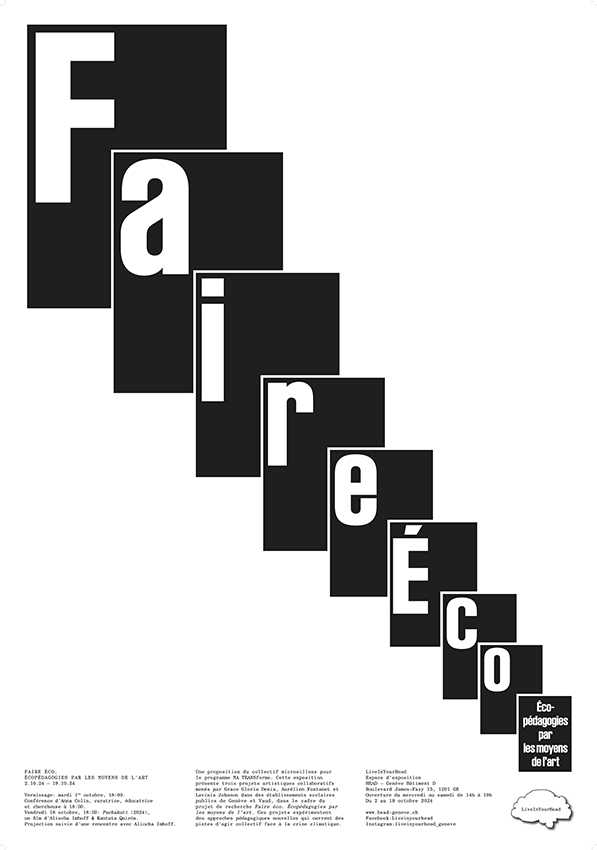
FAIRE ÉCO. ECOPEDAGOGIES THROUGH THE MEANS OF ART
Exhibition at LiveInYourHead, Geneva, 2-19 October 2024.
This exhibition emerges from the hypothesis that artistic co-creation practices can, within an educational framework, support a global, sustainable and collective ecological transformation.
Situated within the field of critical pedagogies, ecopedagogy challenges individual competition, systems of oppression and inequalities, drawing on a critique of exploitation in all its forms.
To bring about a radical shift and develop a pedagogy that can — beyond a logic of individual small gestures or environmental education — be ecological in a broader sense, it is necessary to move beyond strictly cognitive forms of learning and encourage sensitive approaches. Art, through its transdisciplinary nature and its ability to engage with the emotional, affective and psychological dimensions of our existence, provides a privileged space for addressing ecology in all its complexity and imagining other ways of making worlds.
This exhibition presents three artistic co-creation projects led by Grace Gloria Denis, Aurélien Fontanet and Lavinia Johnson, in public schools in the cantons of Geneva and Vaud. These projects experiment with new pedagogical approaches that open up avenues for reflection and collective action in response to the climate crisis.
The exhibition is accompanied by a conference by Anna Colin, a professional development day with Angela Barthes, Enseignant·e·s pour le climat et la biodiversité and Yves Corminboeuf, a reading group led by Anne-Laure Franchette and the students of the TRANSforme Master’s programme, and a screening of the film Pachakuti by the collective Le Peuple qui manque.
A proposal by the collective microsillons for the TRANSforme Master’s programme, as part of the research project Faire éco. Écopédagogies par les moyens de l’art, supported by the RCDAV.
Exhibition graphic design:
Sébastian Gross
(the posters were created in collaboration with
ECPS students from La Petite Ourse).
Communication graphic design:
Neo Neo
Graphic design for Aurélien Fontanet’s installation:
Baptiste Bonnard
Textile production for Lavinia Johnson’s piece:
Barbara Mermoud
Seating:
Collectif CO (TRANSforme Master’s programme). Structures built following a workshop by the collective ETC.
Technical production:
Xheneta Imeri
Acknowledgements:
Anaïs Aik, Jérôme Bichsel, Heba Bieri, Tani Finkel, Bernard Kaeser, Anne Robert Locher and all the students involved, Gabriella Della Vecchia for the Department of Public Education.
Conference by Anna Colin, independent curator, educator, researcher and gardener, for the exhibition opening, 1 October 2024
Professional development day for teachers and cultural mediators. With: Enseignant.e.s pour le climat et la biodiversité (Geneva collective); Angela Barthes (specialist in education for sustainable development); Yves Corminboeuf (Head of Sustainability at HEAD–Geneva), 4 October 2024.
ENTRY SPACE
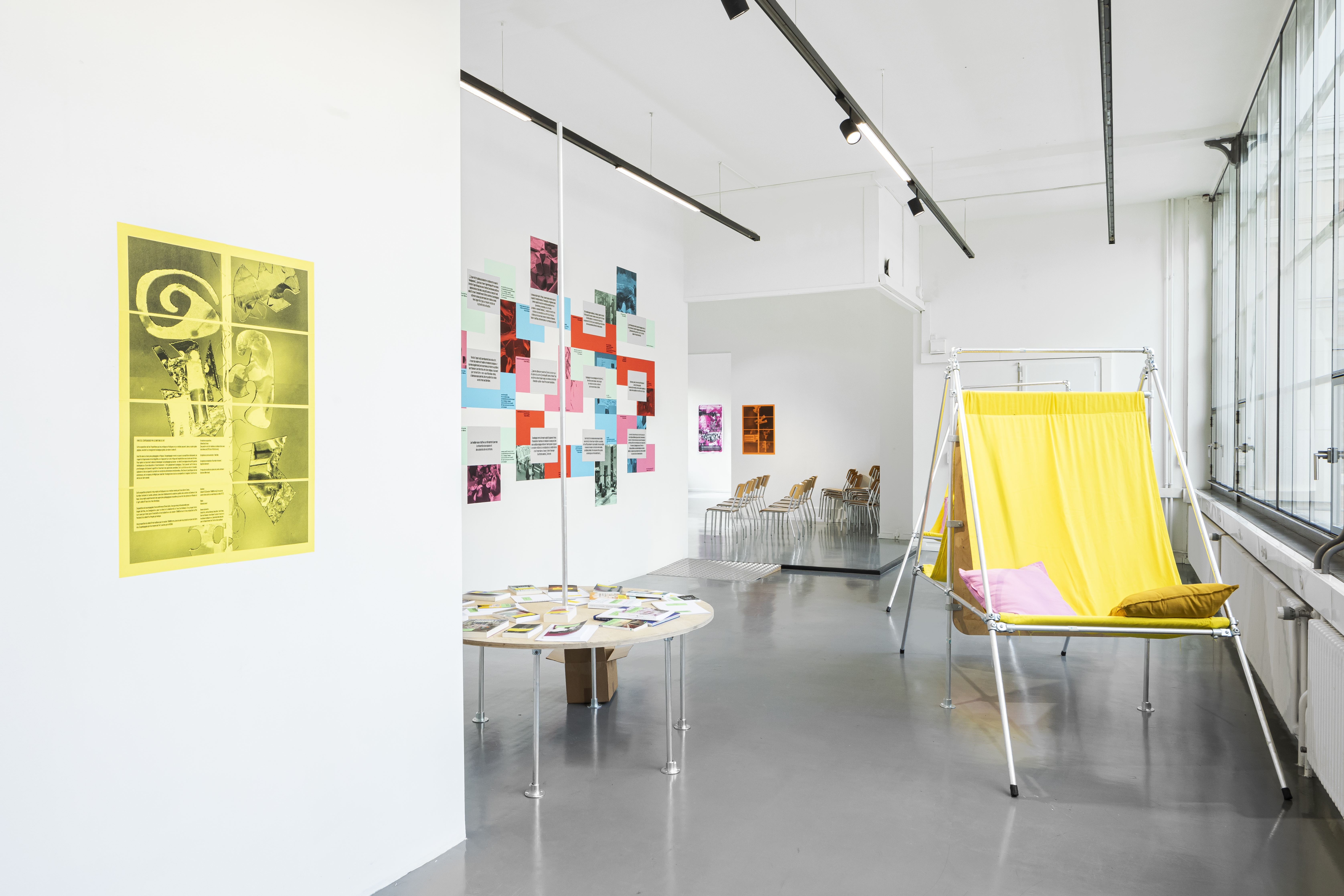
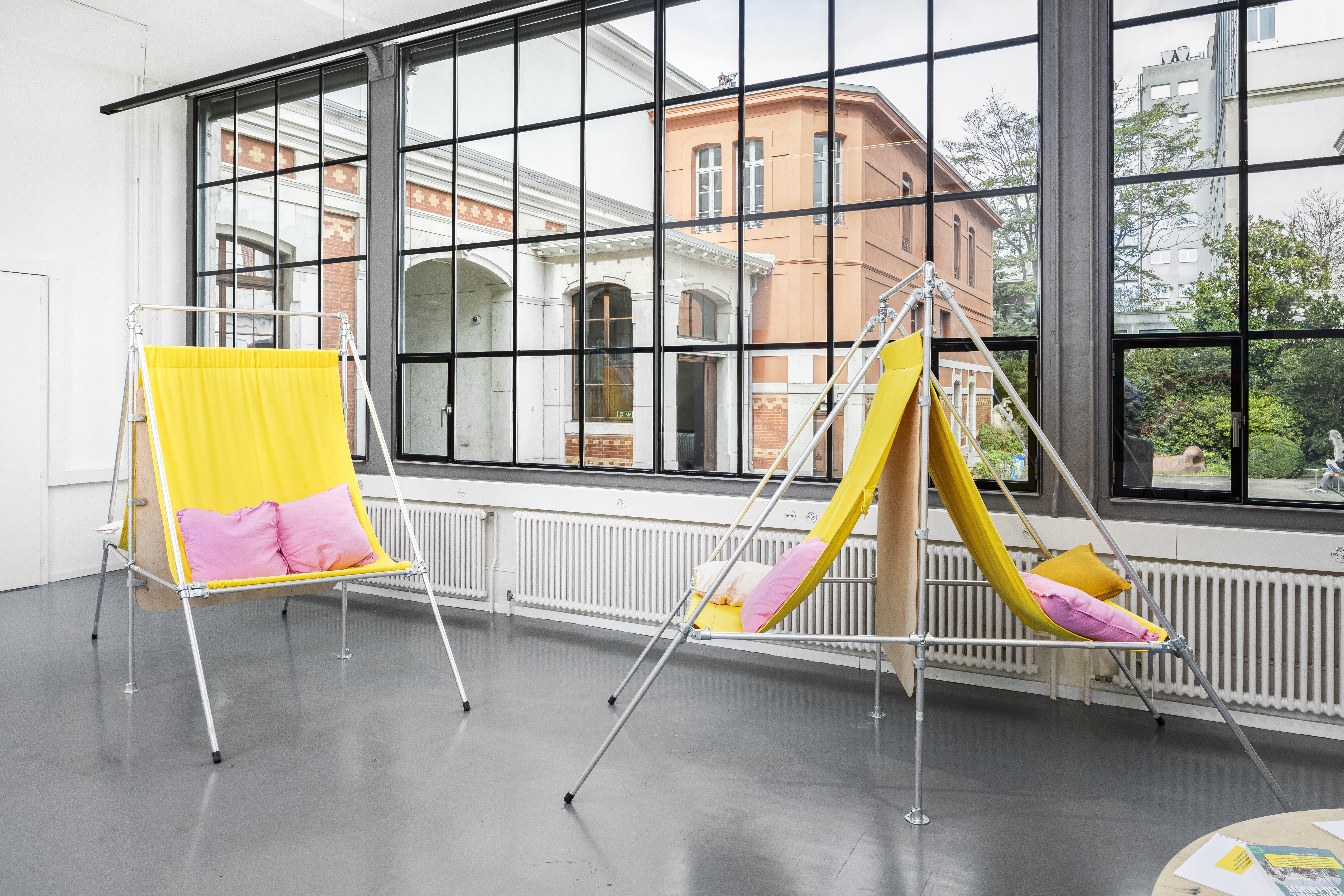
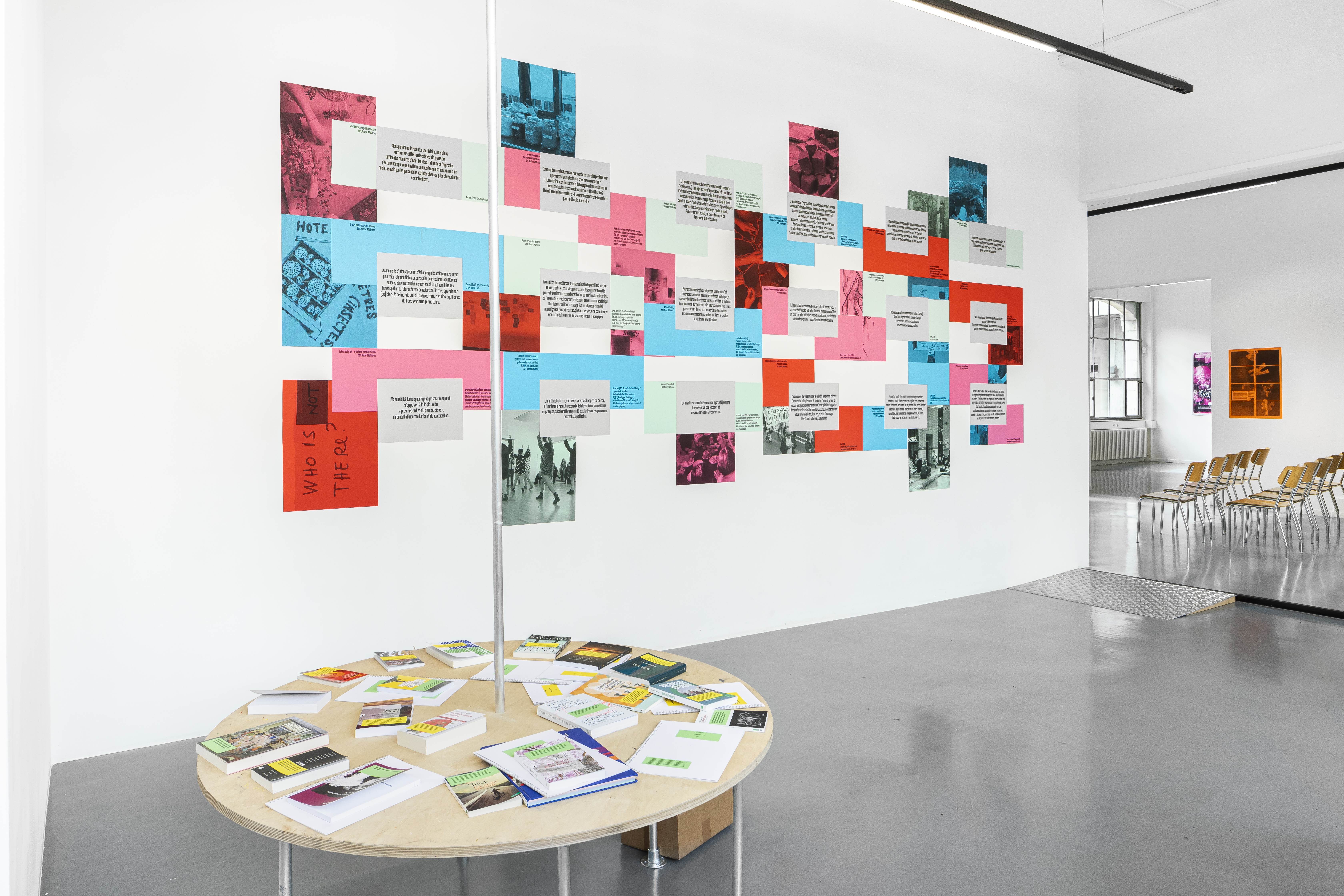
GRACE GLORIA DENIS' INSTALLATION
CULINARY CARTOGRAPHIES
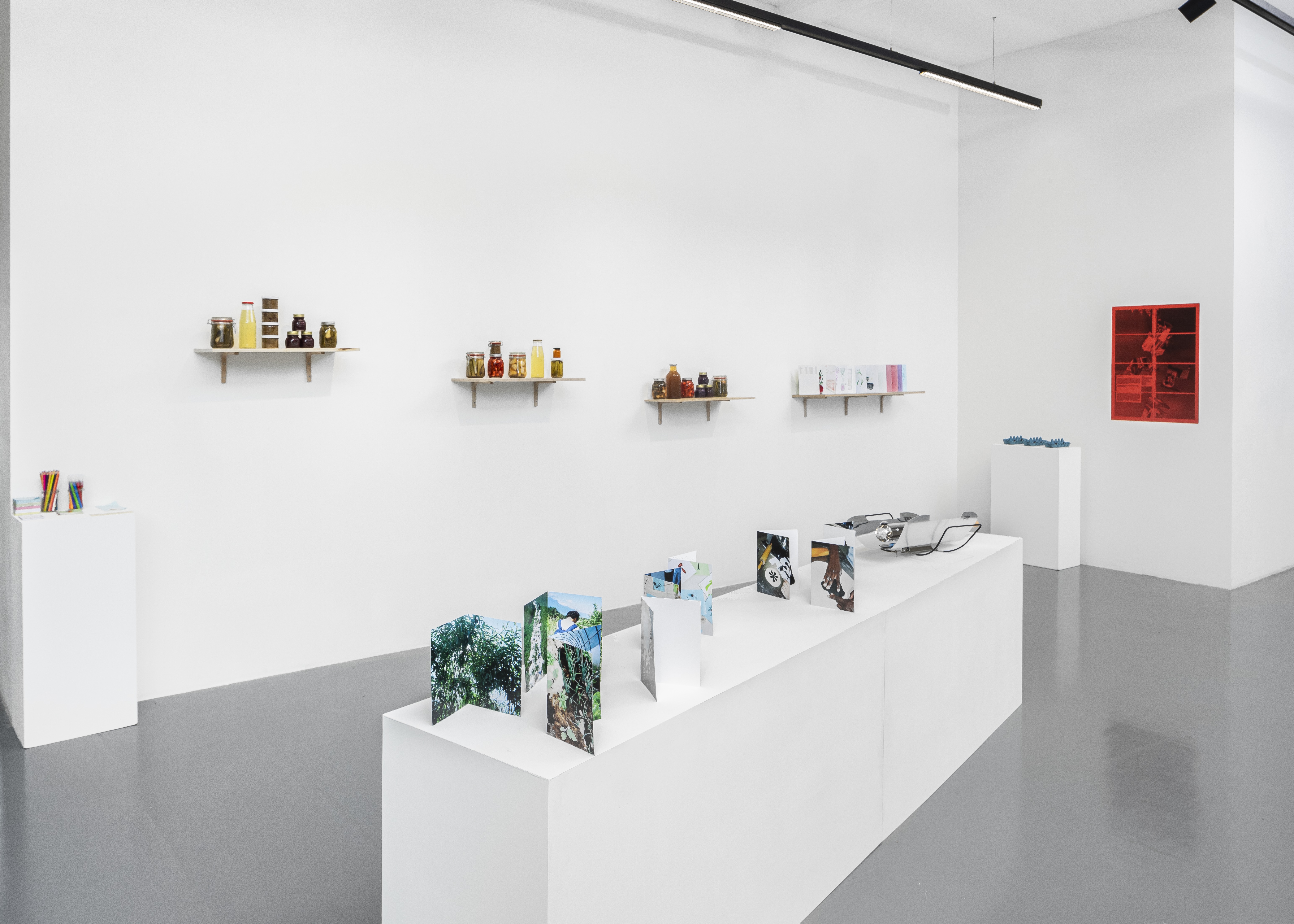
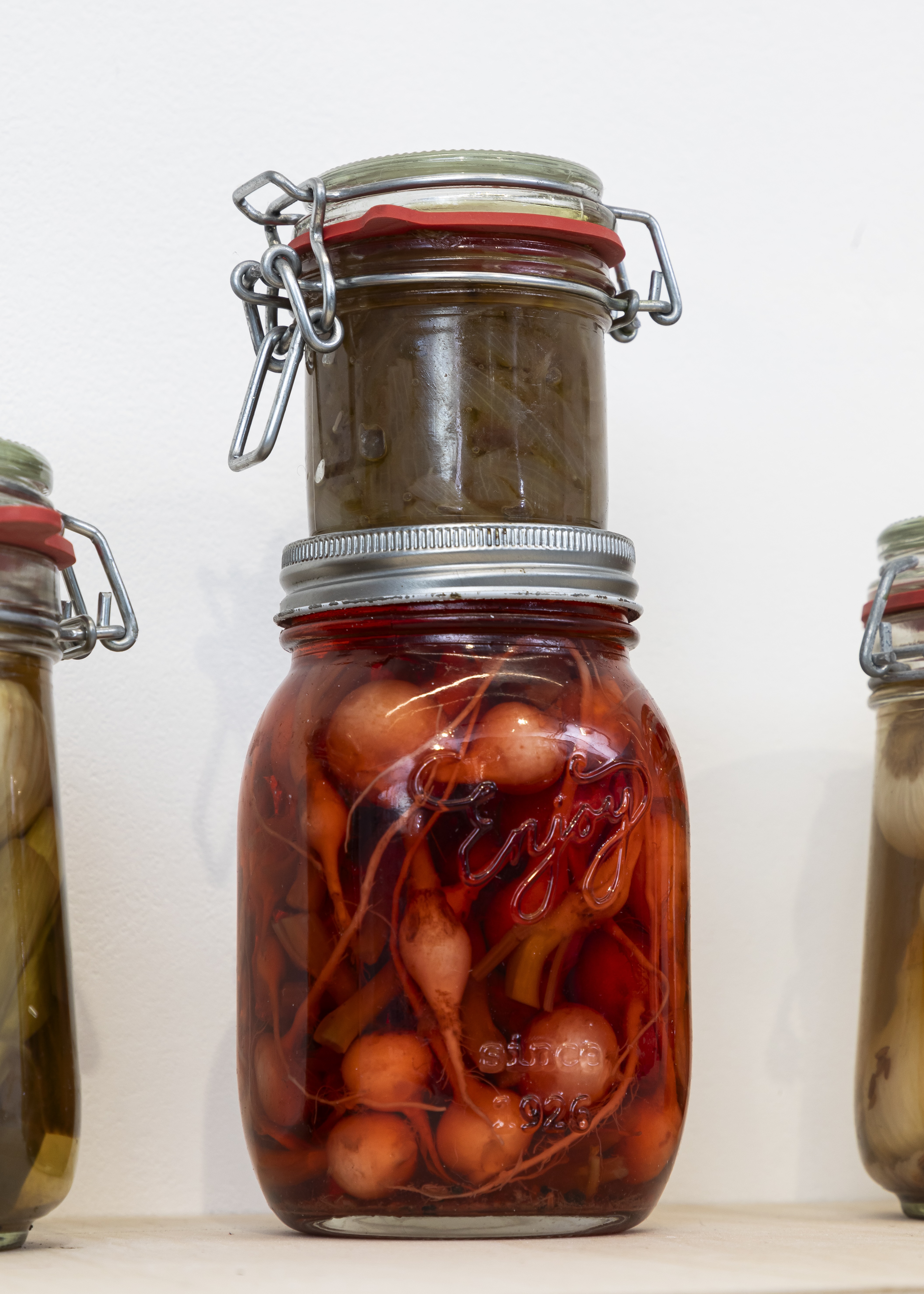
Grace Gloria Denis’s project for the Faire Éco research initiative draws on the principles of agroecology as a methodology for fostering a form of eco-literacy among the participating students. The programme engages with local food systems to explore concepts such as resilience and autonomy, notably through the transformation of seasonal ingredients such as elderflowers and young alliums as part of an investigation into food preservation techniques. Activities including solar oven cooking and the making of seed bombs highlighted the importance of renewable energy sources while simultaneously promoting biodiversity and ecological resilience.
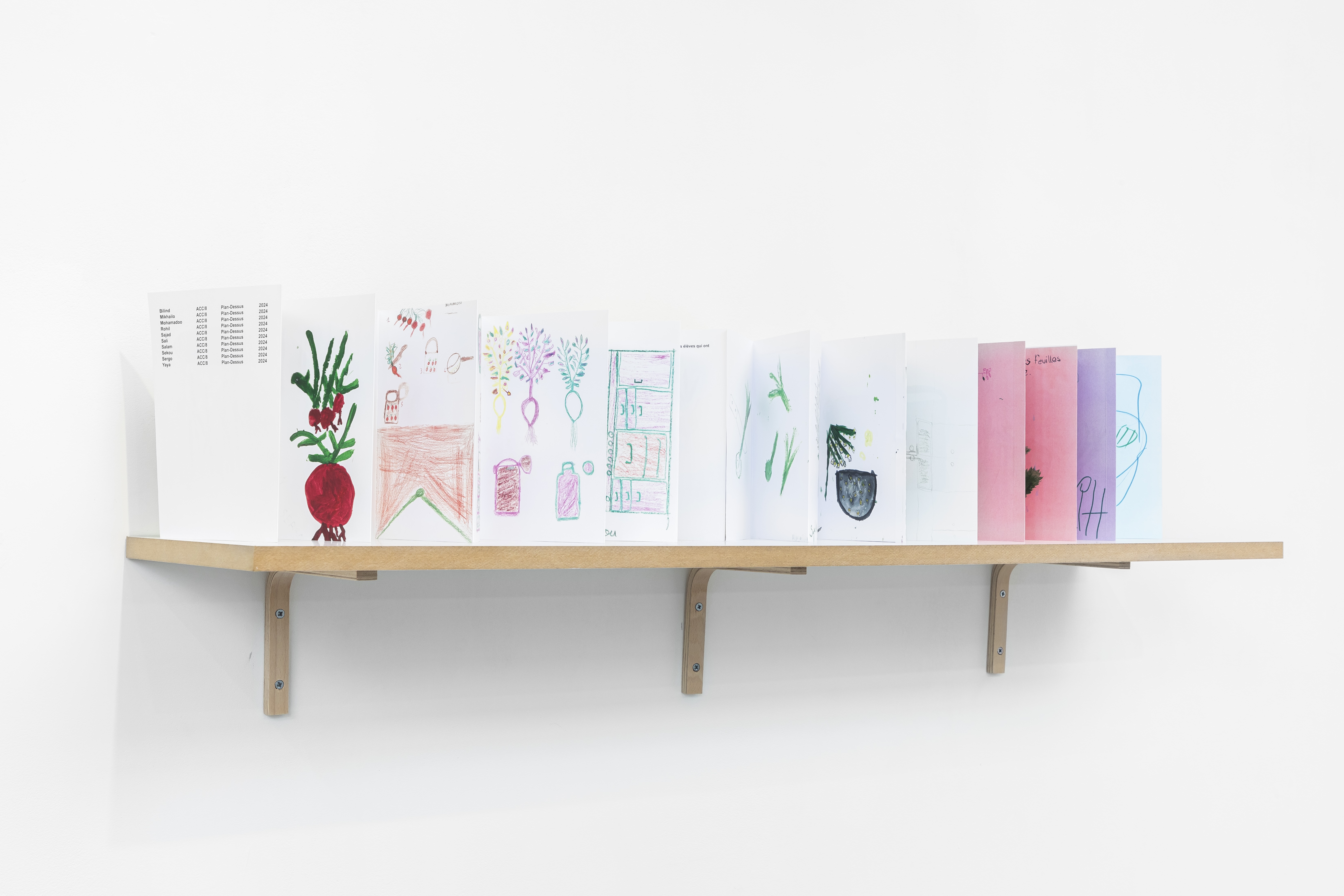
The programme extended beyond the traditional classroom setting, taking place in fields, kitchens, and the school’s outdoor recreational spaces. Through immersive fieldwork at Praz Bonjour, a collective agroecological farm in Blonay, students actively participated in sustainable farming practices, deepening their understanding of agroecology through hands-on experience. Among the activities, a collective mapping exercise led by Sofía Olascoaga explored how ingredients are produced and circulated in relation to cultural knowledge, while the workshop Bread Archaeologies for the Future, facilitated by Cocina Colaboratorio, examined food heritage as a means of connecting with territories.
Created by: Aleksandar, Ali, Andrii, Bautista, Bilal, Bilind, Feben, Leyla, Luana, Mikhailo, Mohamadoo, Rohil, Sajad, Sali, Salam, Sekou, Sergo, Sofia, and Yaya / Reception Class and Literacy Class, Plan Dessus, Vevey – Heba Bieri (teacher).
With: Grace Gloria Denis, Sofía Olascoaga, and Cocina Colaboratorio.
AURÉLIEN FONTANET'S INSTALLATION
CAUSES
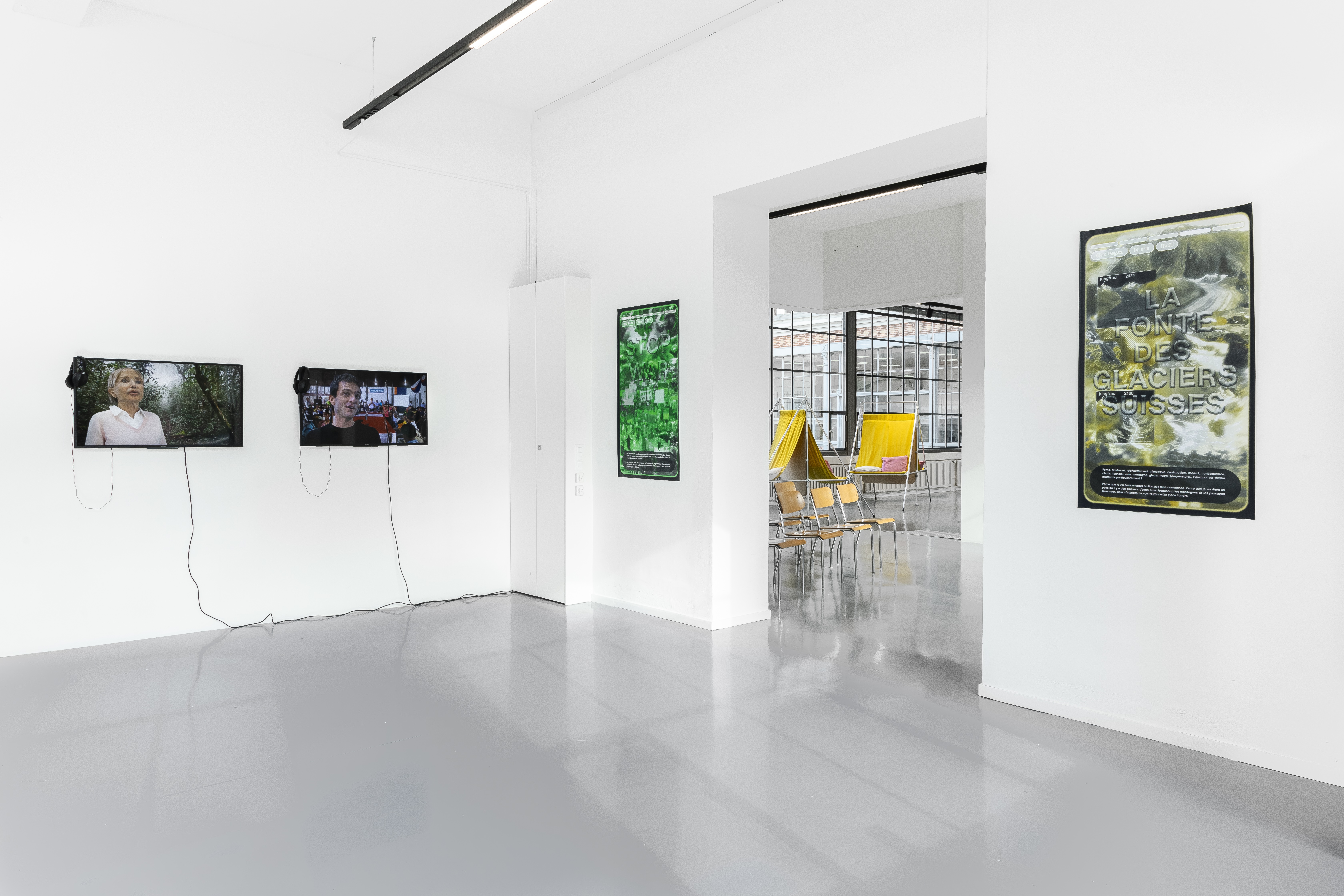
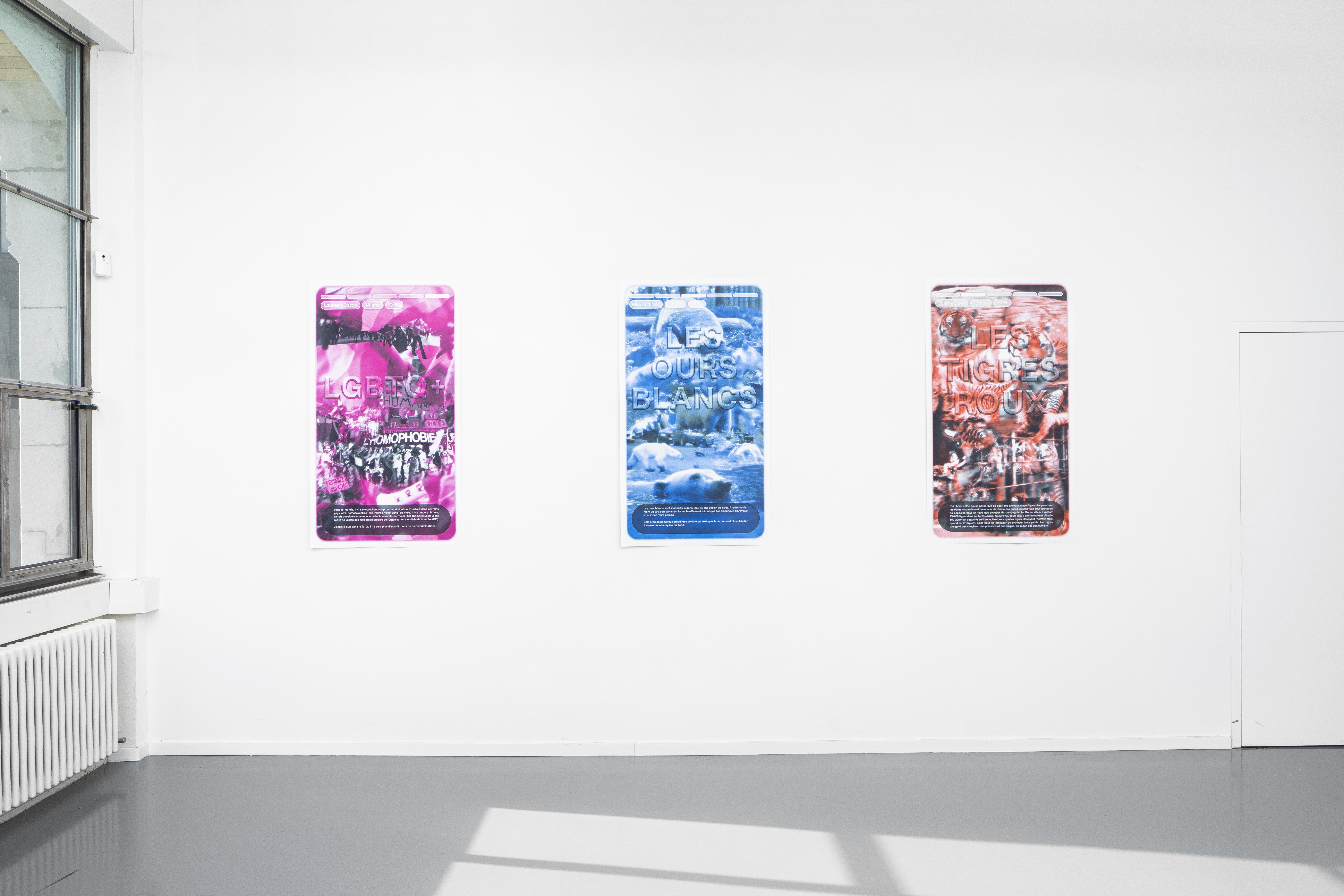
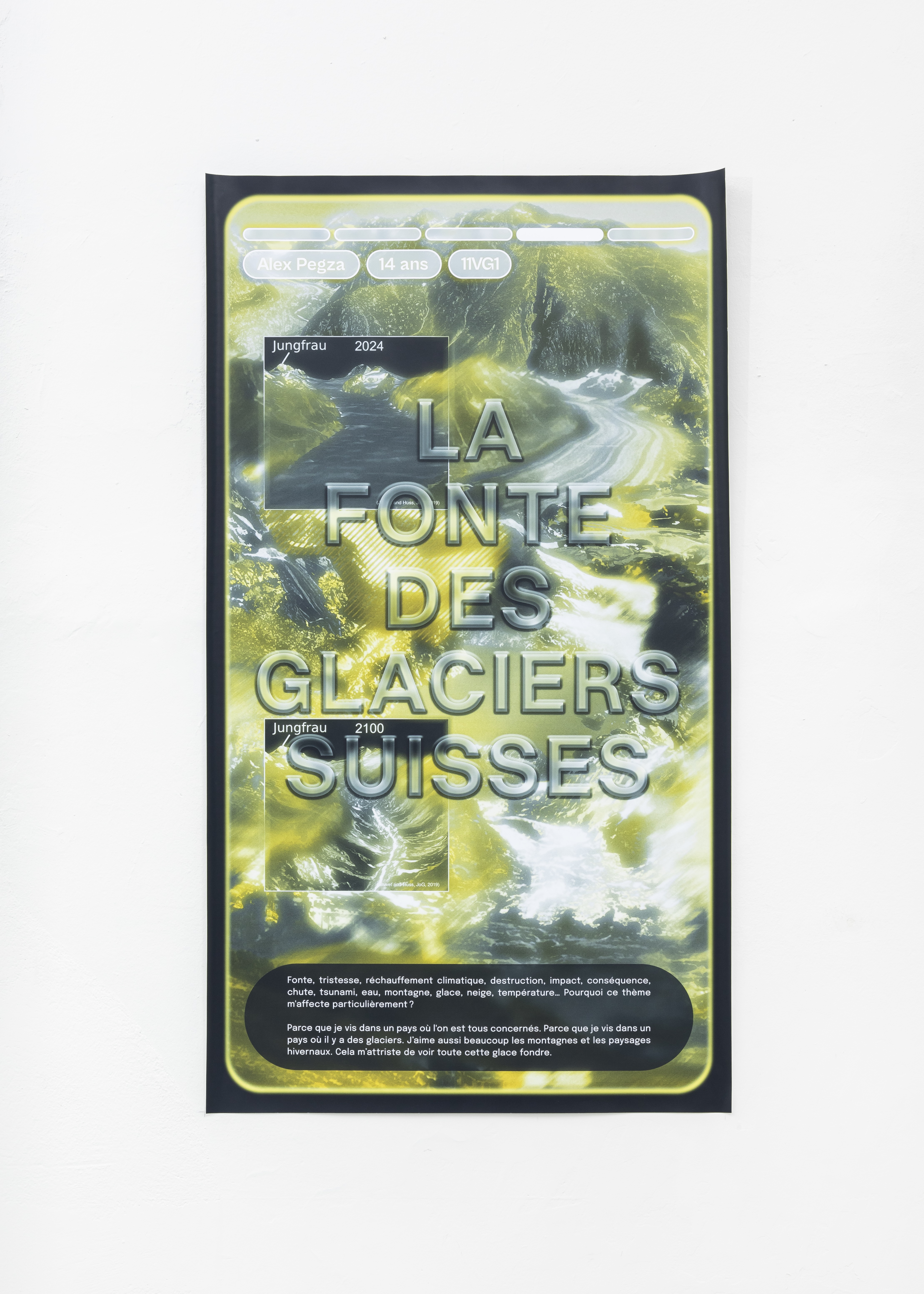
Aurélien Fontanet’s project aimed to raise students’ awareness of ecological, social, and humanitarian issues through a range of artistic practices, including video and photography, while encouraging them to reflect on what it means to stand up for a cause. Each student selected a cause that mattered to them and explored artistic techniques to express and advocate for their commitments. Developed in collaboration with visual arts teacher Jérôme Bichsel, the project took place as part of an elective course with a group of five students, fostering a collaborative learning environment.
The project included exchanges with invited guests who shared their ecological commitments, enabling participants to develop both their artistic skills and their social awareness while reflecting on ways to actively engage in defending causes that are meaningful to them.
Created by: Mila Acalovic (7p), Laureen Carco (10ug1), Valerie Does (8p6), Alex Pegza (11vg1), Ixeia Serra (7p2) / Visual Arts Elective, Genolier Primary and Secondary School – Jérôme Bichsel (teacher).
With: Aurélien Fontanet, Aurélien Stoll (Movement for International Cooperation), and Anita Studer (Nordesta – Reforestation & Education).
INSTALLATION DE LAVINIA JOHNSON
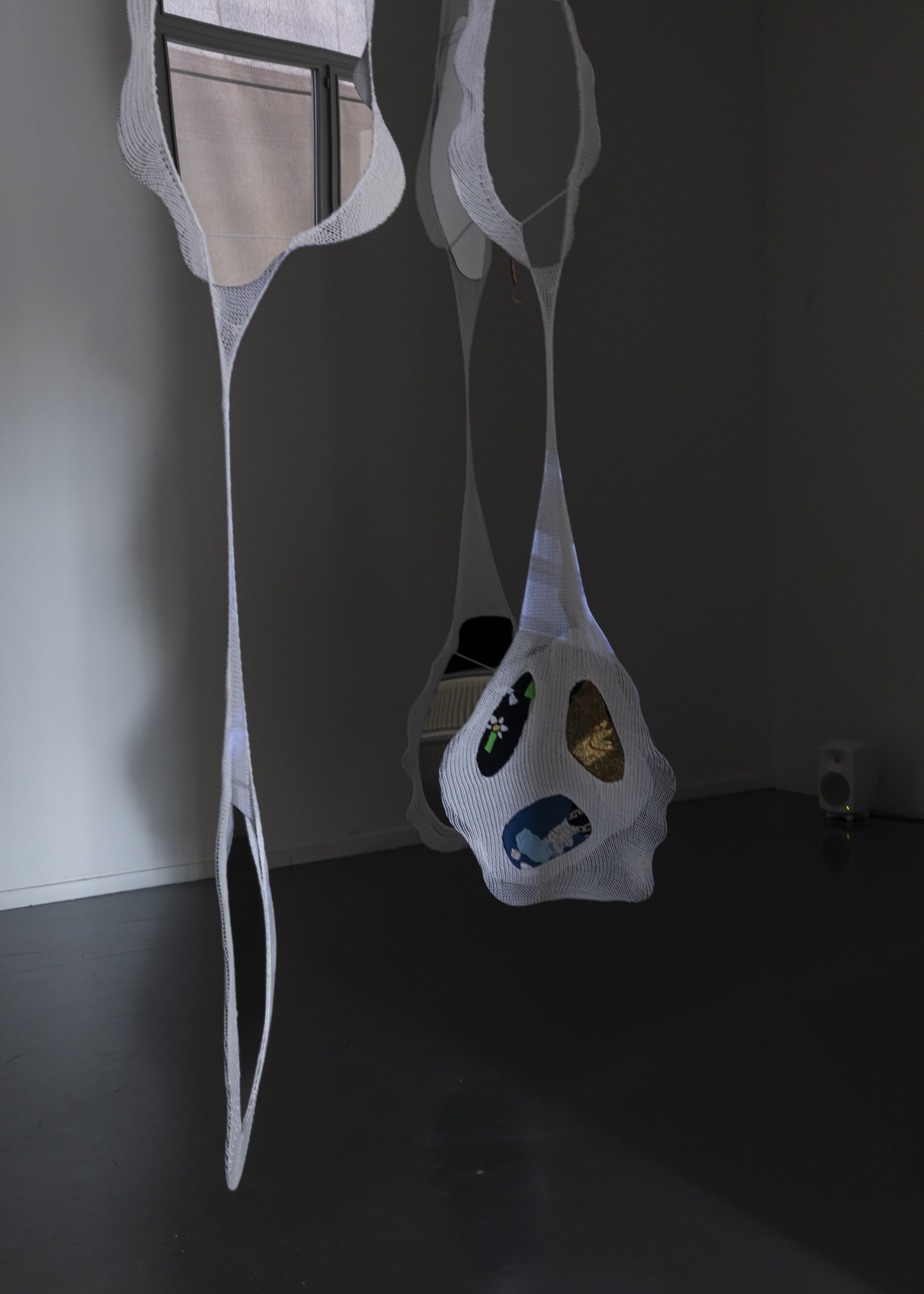
BODY–PLANET
How can we become one body with the world—with the world we inhabit, our cells, our organs, our roots, our rivers, our skin?
Lavinia Johnson’s project reflects on myths. These stories, which we carry and transform across generations, offer both a complex and poetic way of understanding the world.
Cosmogonic narratives are a way of representing the multitude of interconnections that sustain the balance of our planet.
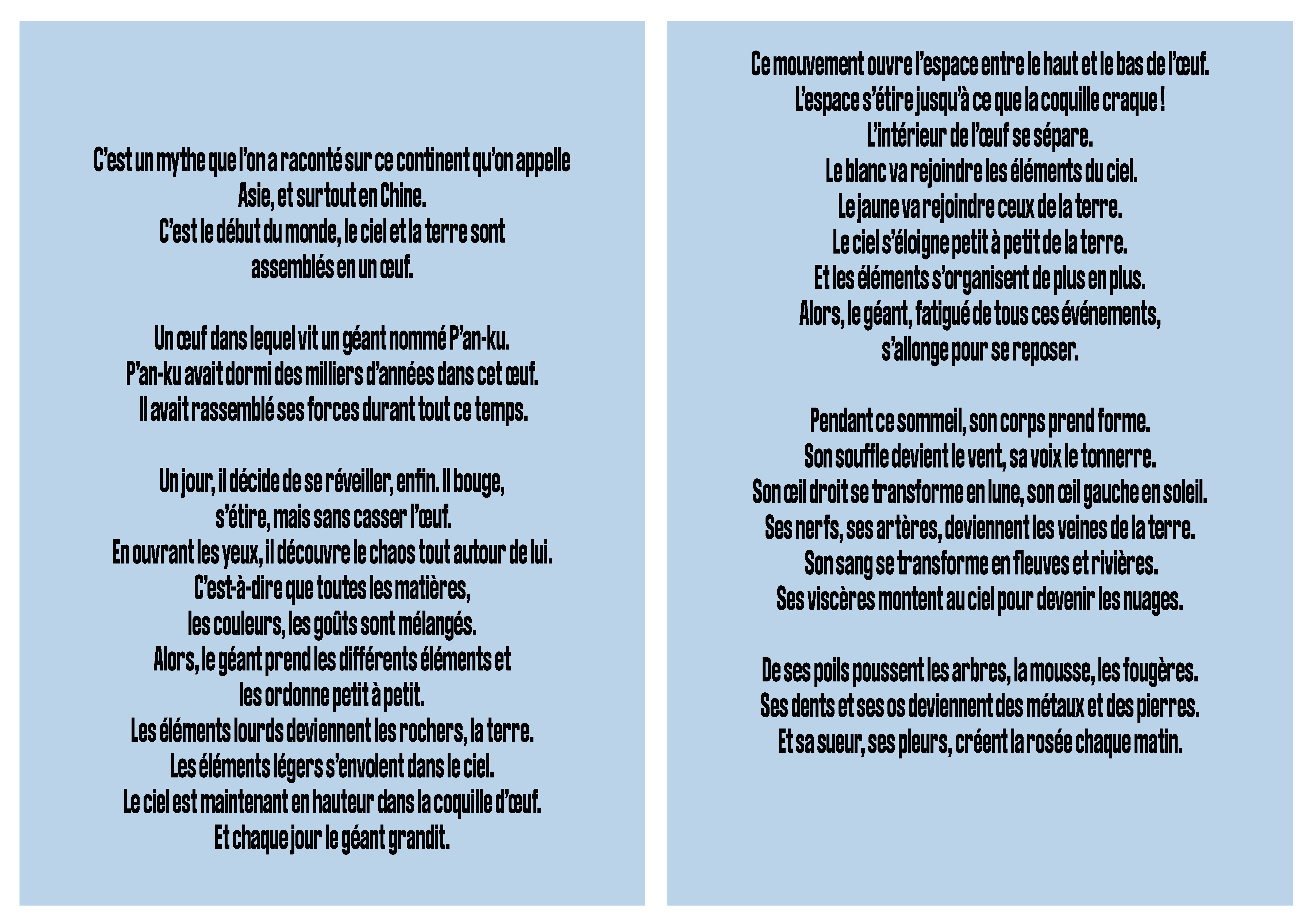
P’an-ku is one of these myths that grounds an ecological vision of the world in a tangible reality. If the world is a giant body, then every part of it is as interdependent as the veins, muscles, and bones of my own individual body. By sensing these analogies between my anatomy and the physiology of the Earth, I embody the magic of a living planet. In the schoolyard, the rain may become tears, a tree branch an elbow, the distant mountain an outstretched leg, the rocks giant teeth. By inhabiting my body, I inhabit the world.
Created by: Adel Benaoudia, Alessia Ndreka, Aliya Belbahri, Célestine Vetterli, Eline Rogivue, Eliyas Mohammed, Elton Haziri, Ethan Schneiter, Gabin Guerraty Klambert, Gabrielle Correia, Güney Karatas, Hugo Lorente Tolsa, Idriss Chaffar, Laila Gateley Said, Lina Boulmerka, Maëlys Cordier, Mathilde Lereculeur, Milkias Sereke, Shanza Muhammad, Tiphaine Borch, Yumi Pahud / 5th Grade Class, École des Vergers – Tani Finkel, Anne Robert Locher (MDAS); Naël Ajeti Varela, Elisa Alidemi, Winta Asmelash, Elina Avdullahi, Raphael Basilico, Sara Begovic, Alicia Bourgeois, Gabriel Cavalete Da Silva, Lyana Correia Machado, Beatriz Gonçalves Sampaio, Talicia Horombo, Sophie Moreira Doro, Arthur Rappo Perez, Lea Rodriguez Neves, Mehdi Samih, Rodrigo Silva, Luan Tupella, Luciana Vargas Lopez, Andrey Zarovsky / 7th Grade Class, École d’Onex-Parc – Bernard Kaeser, Anaïs Aik (MDAS).
With: Lavinia Johnson, Valeska Romero Curiqueo, Fabian Delpy, Barbara Mermoud, Stefan Lilov, and the Susin-Johnson family.
PUBLIC PROGRAM
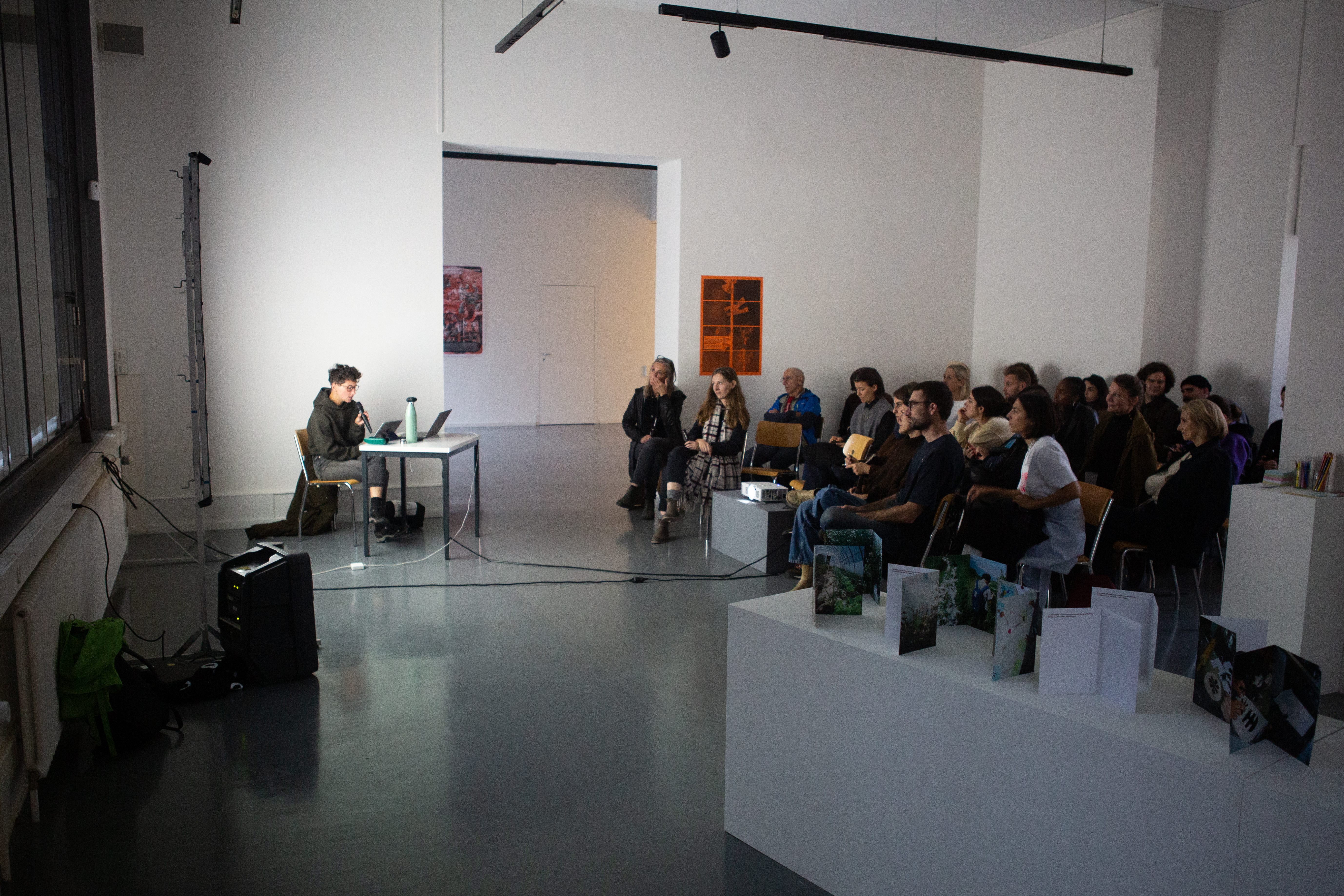
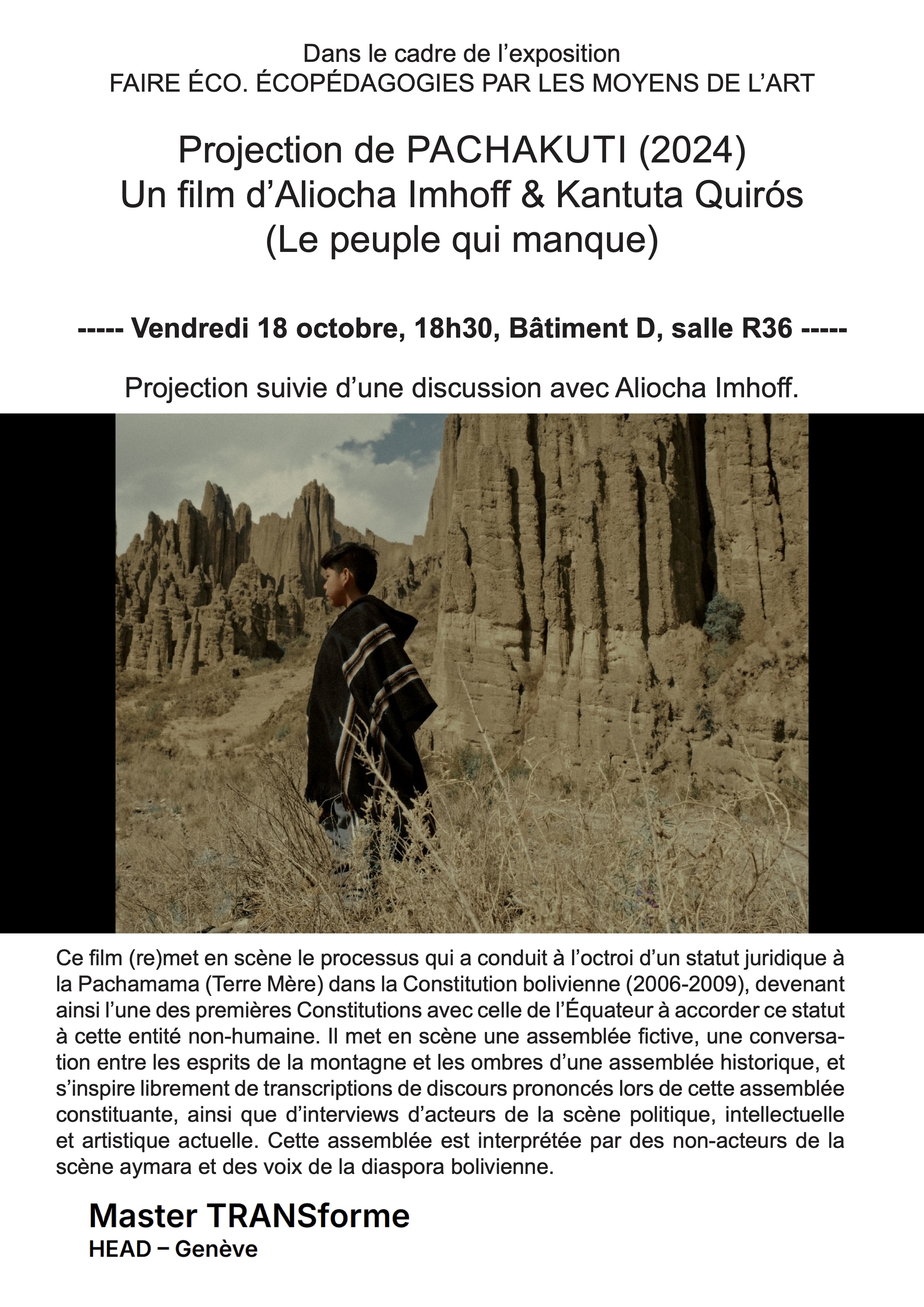
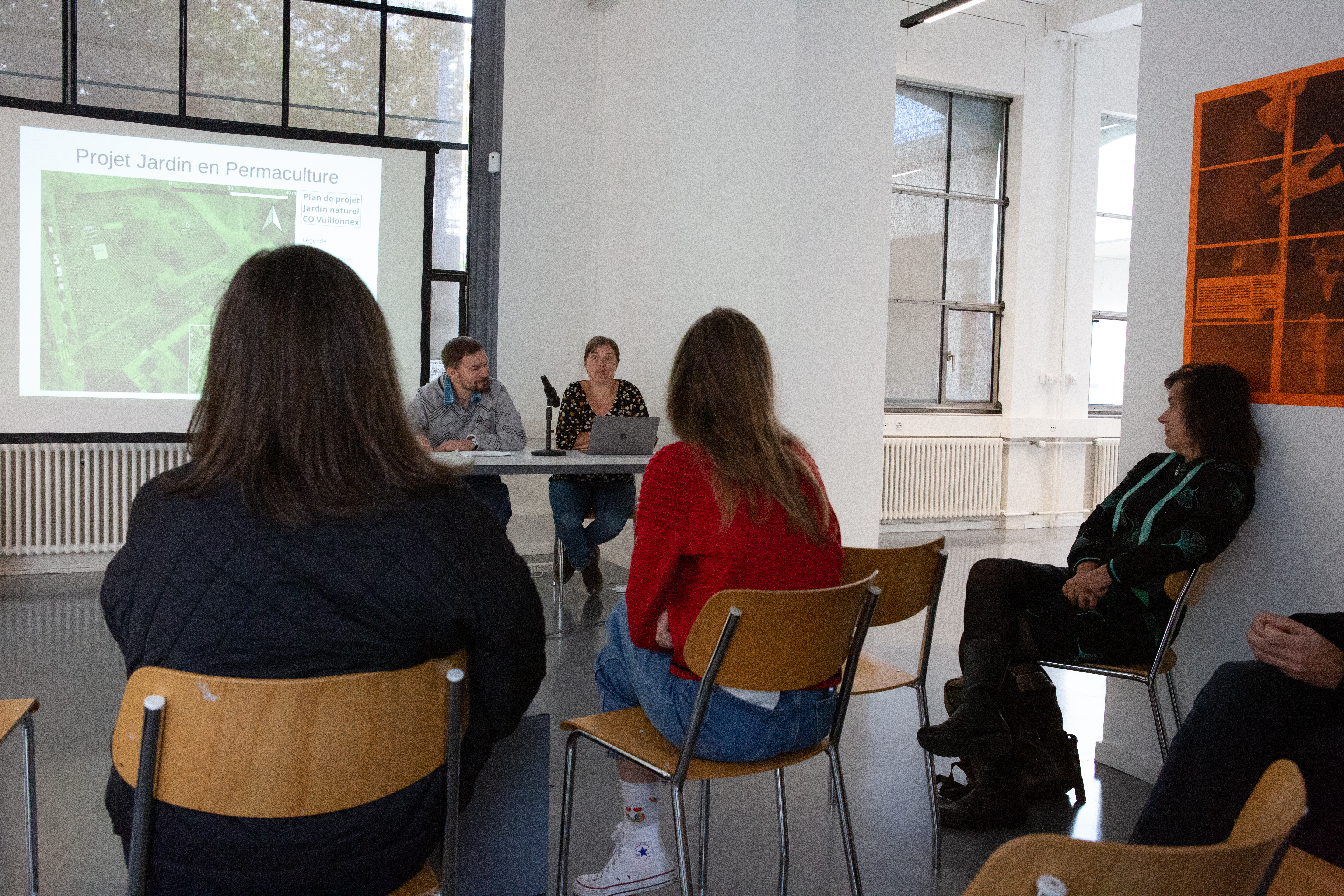
Photo credits for the exhibition views: ©HEAD-Genève, Raphaëlle Mueller
CAUSES
Aurélien Fontanet’s project aimed to raise students’ awareness of ecological, social, and humanitarian issues through a range of artistic practices, including video and photography, while encouraging them to reflect on what it means to stand up for a cause. Each student selected a cause that mattered to them and explored artistic techniques to express and advocate for their commitments. Developed in collaboration with visual arts teacher Jérôme Bichsel, the project took place as part of an elective course with a group of five students, fostering a collaborative learning environment.
The project included exchanges with invited guests who shared their ecological commitments, enabling participants to develop both their artistic skills and their social awareness while reflecting on ways to actively engage in defending causes that are meaningful to them.
Created by: Mila Acalovic (7p), Laureen Carco (10ug1), Valerie Does (8p6), Alex Pegza (11vg1), Ixeia Serra (7p2) / Visual Arts Elective, Genolier Primary and Secondary School – Jérôme Bichsel (teacher).
With: Aurélien Fontanet, Aurélien Stoll (Movement for International Cooperation), and Anita Studer (Nordesta – Reforestation & Education).