ECOPEDAGOGICAL LANDSCAPE
The Ecopedagogical Landscape is an activatable and nomadic artwork by the collective microsillons, a tool that enables artistic workshops to be carried out outside the classroom, outdoors, with children aged 6 to 10, based on the principles of ecopedagogy.
Initially produced for the exhibition The Ideal School at the Magasins Généraux (Pantin, France, 21 June to 12 October 2025) as part of the exhibition The Ideal School, the Ecopedagogical Landscape is intended for long-term use and adapts to different activation contexts in order to propose new approaches to relationships between humans and non-humans through the means of art.
The artwork takes the form of a large textile surface (150 × 200 cm) bringing together elements whose arrangement depends on the choices of participants in order to engage in ecopedagogical activities (instruction-based artworks to create, instructions for observation exercises, questions to open a discussion, short texts to read as a starting point for conversations, instructions for movement exercises…). A large collection of elements makes it possible to construct a unique pedagogical sequence, situated within a specific context and adapted both to the group’s interests and to the teacher’s objectives.
This object, a hybrid between a meeting mat used in active pedagogies, an exploration mat and a picnic blanket, invites children to activate their senses, echoing artists who have developed sensitive approaches to the environment (Kathrin Böhm, Patricia Johanson, Nils Norman, Yoko Ono, Tree School…).
Primarily intended for outdoor use, the object makes it possible, in particular, to surround an element of the chosen context (a plant, a rock, a piece of waste, a signpost…) in order to develop a pedagogical sequence directly connected to what is present at the site where one is located, encouraging a situated way of thinking about our relationship to the world.
This piece invites the practice of ecopedagogical experiences through the means of art within schools, but also in holiday centres, community settings or cultural mediation contexts.
Textile production: Garance Grand-Léger
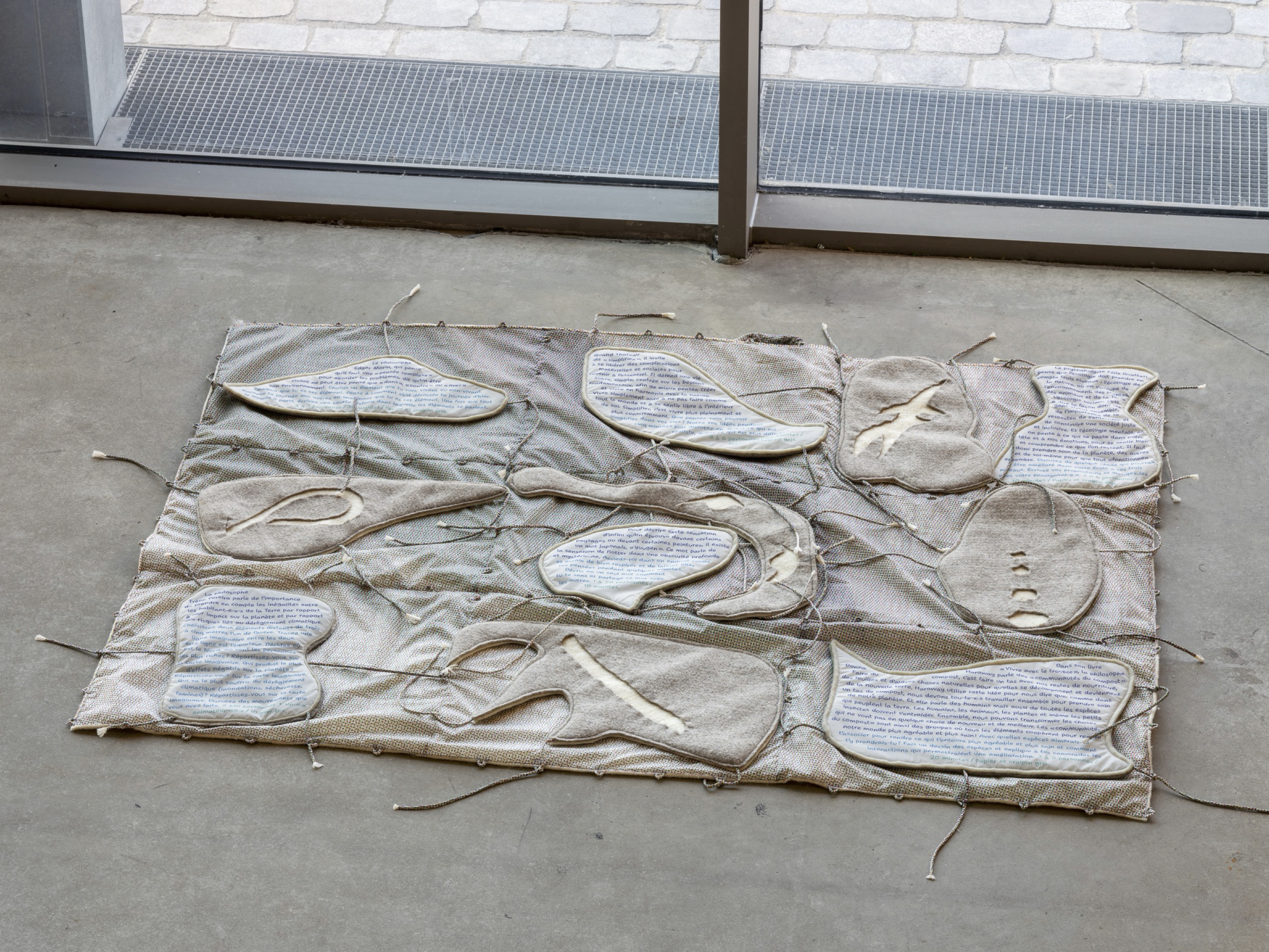
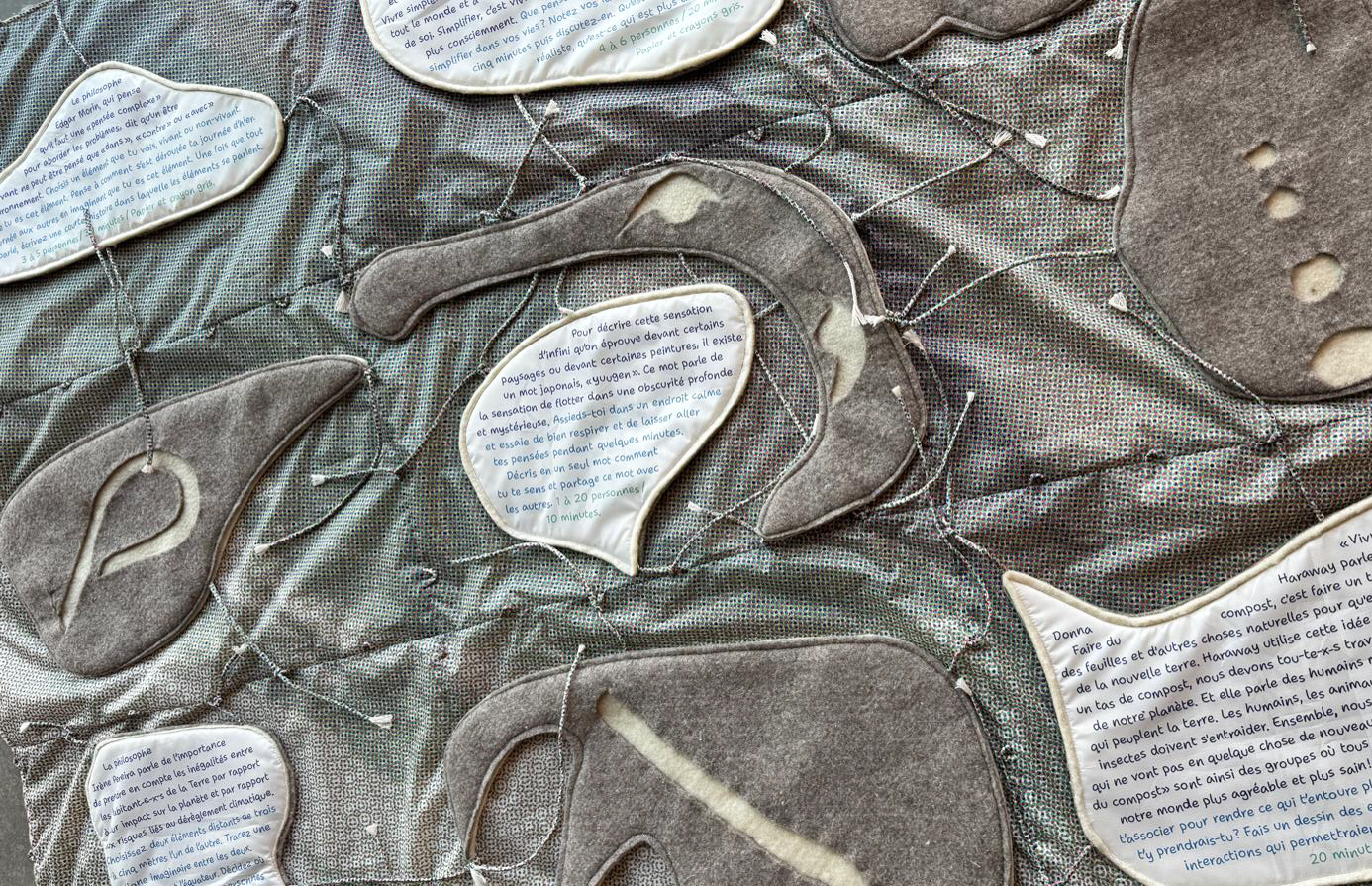
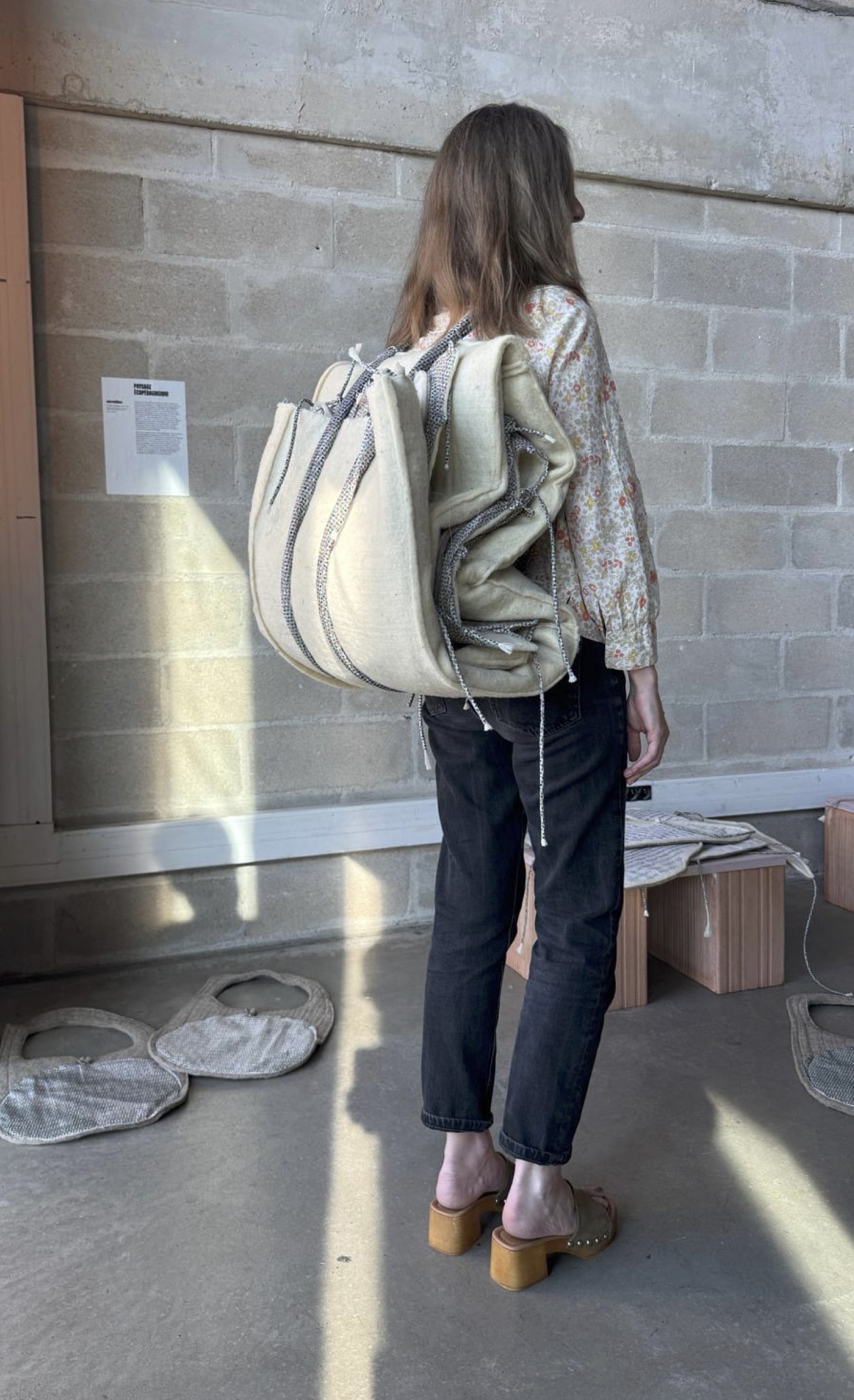
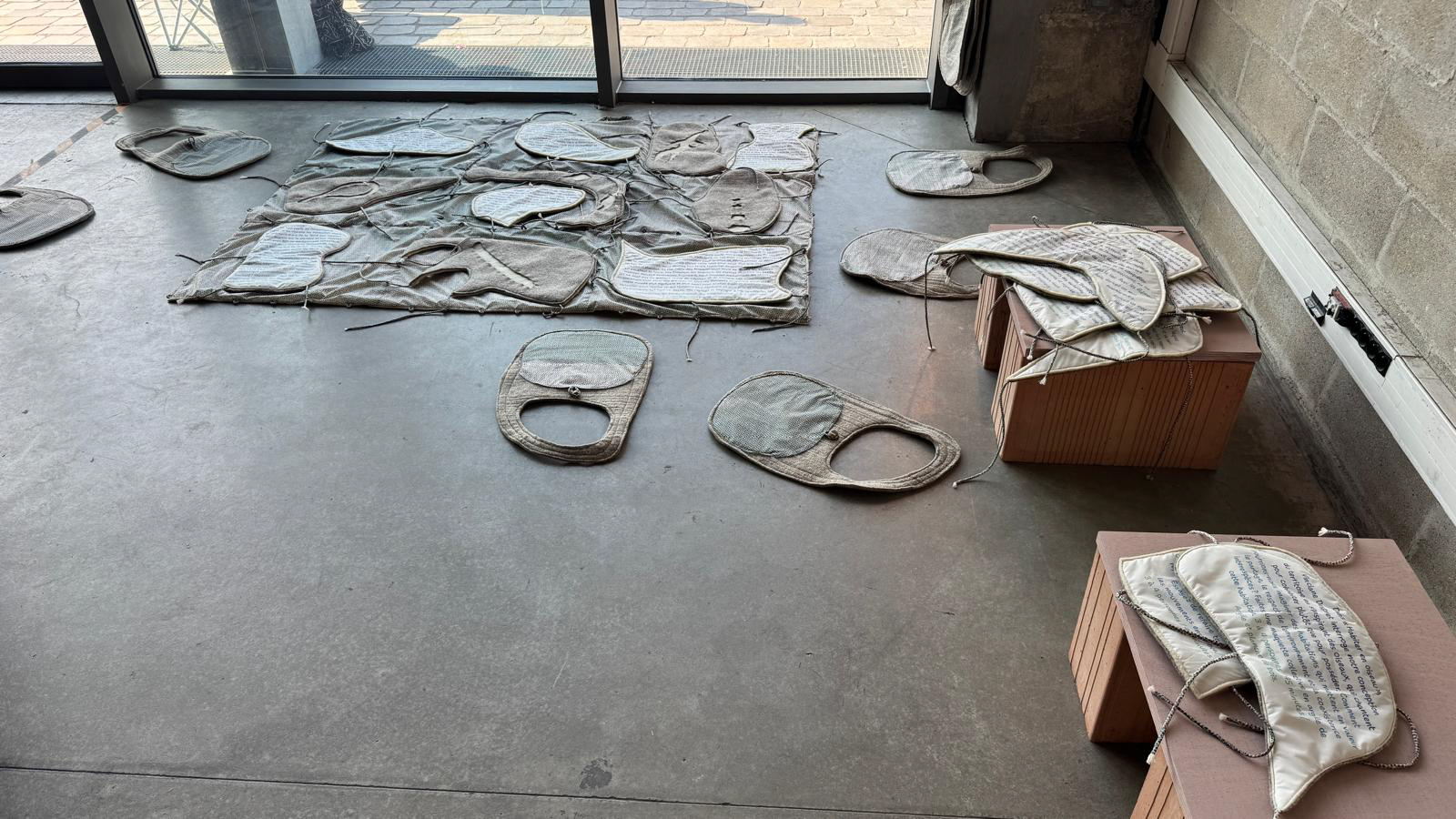
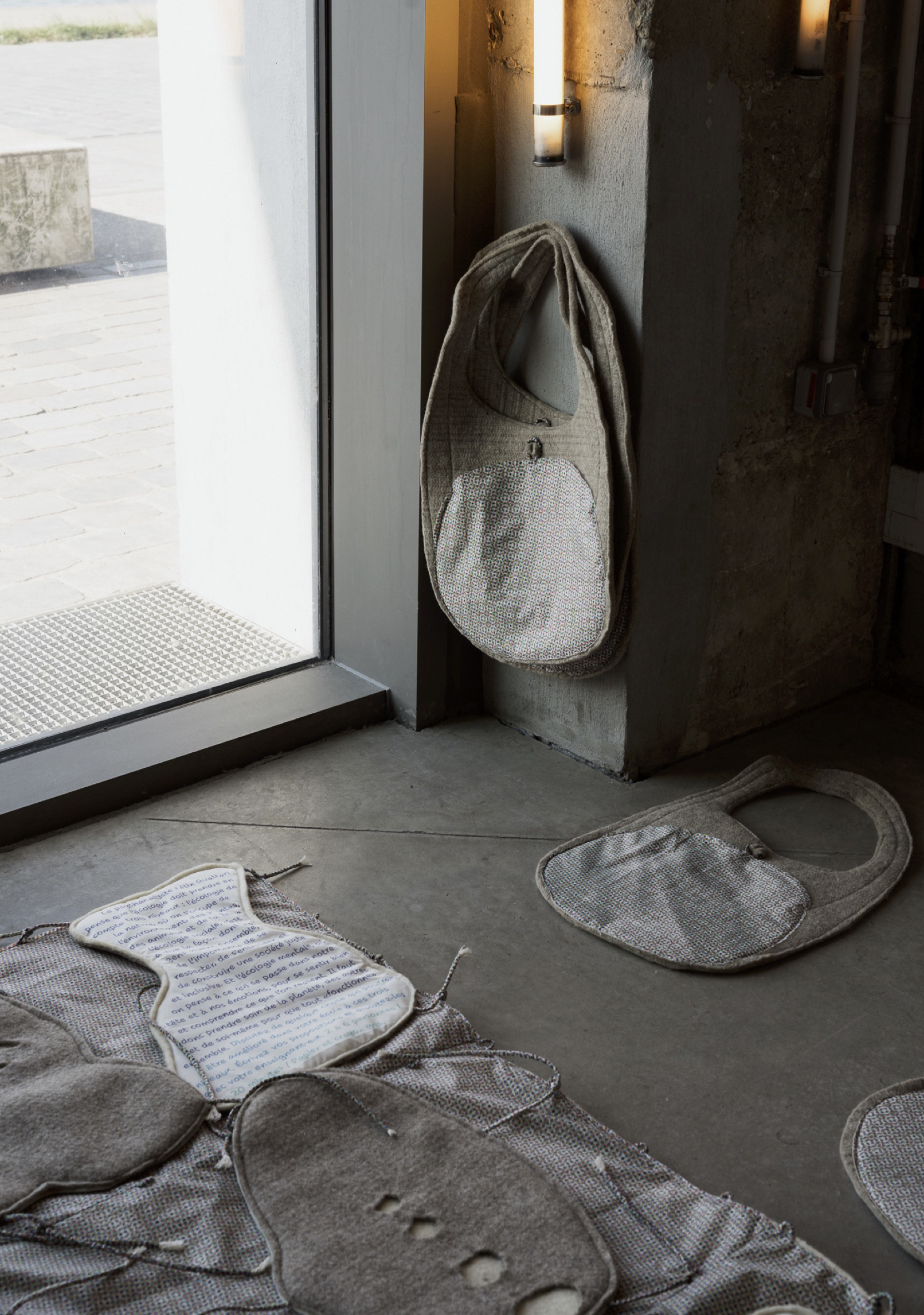
Photo credits: Magasins Généraux (Mathis Payet Descombes et Martin Argyroglo), Anthony Masure, microsillons